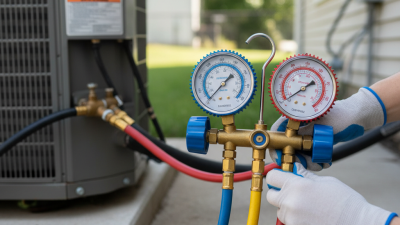
How to Choose the Right AC Gauges for Your Needs?
Selecting the ideal AC gauges is crucial for HVAC technicians and DIY enthusiasts alike. Proper AC gauges ensure accurate measurements, impacting system performance. A report by the Refrigeration Research Consortium highlights that over 30% of HVAC service calls stem from incorrect pressure readings. This underscores the importance of quality in gauge selection.
AC gauges come in various types and functionalities. Understanding these differences can significantly enhance your repair and maintenance efforts. Precision in reading refrigerant pressure not only aids in troubleshooting but also extends the lifespan of the system. Technicians often report that using reliable gauges eliminates many common system failures related to pressure miscalculations.
However, not all gauges are created equal. Some may lack durability or accuracy, leading to costly mistakes. According to a survey by HVAC Insights, 45% of technicians experienced issues with low-quality gauges. This statistic emphasizes the need for careful selection. Making an informed choice based on experience and technical specifications can lead to more effective HVAC solutions.

Understanding AC Gauge Types and Their Functions
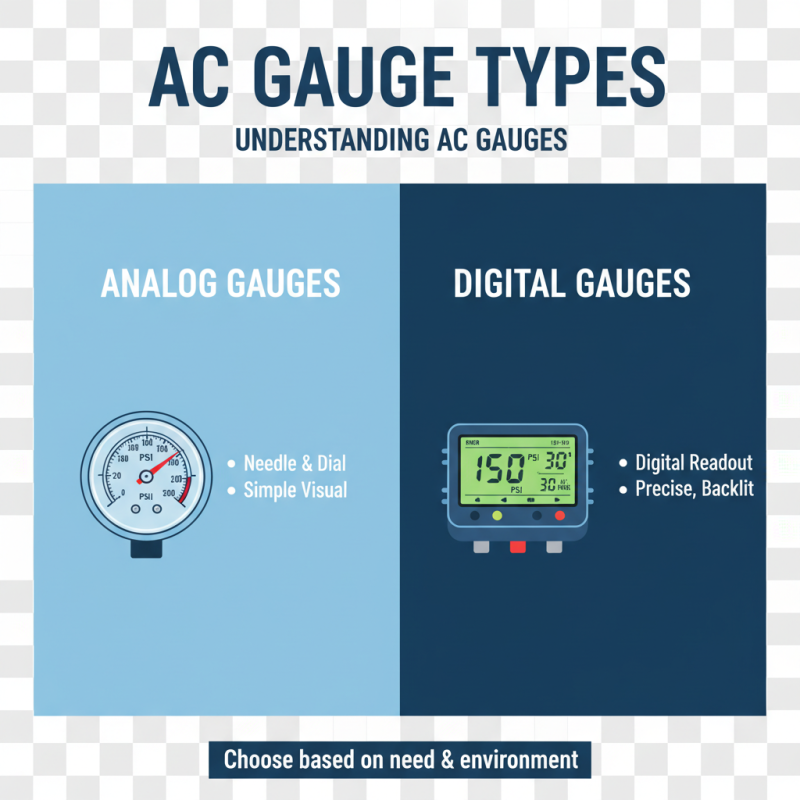
When selecting AC gauges, understanding their types is crucial. Two primary types of gauges exist: analog and digital. Analog gauges display measurements through a needle on a dial. They offer a straightforward visualization of pressure levels. Many technicians prefer these for their simplicity. However, they may require close attention for accurate readings, which can be challenging in bright environments.
Digital gauges are gaining popularity due to their ease of use. They provide precise readings on a screen and often feature backlighting for better visibility. This can be beneficial when working in dimly lit areas. Nevertheless, they rely on batteries and can malfunction. Users must remain vigilant about power levels to avoid interruptions during operations.
Each type has its strengths and weaknesses. The right choice often depends on personal preferences and the specific tasks at hand. Testing various gauges may help shed light on what works best in your situation. Invest time in research and hands-on experience to find the right tool, as the efficiency of your work may hinge on this decision.
Key Features to Consider When Selecting AC Gauges
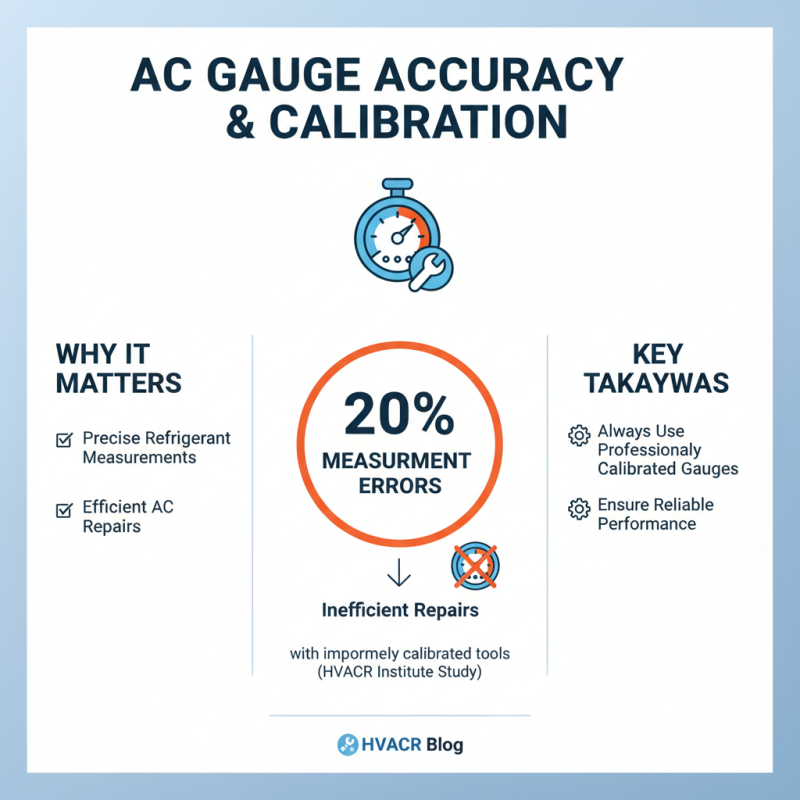
When selecting AC gauges, several key features merit careful consideration. Accuracy is paramount. A study by the HVACR Industry Advisory Council indicates that precise readings can improve system efficiency by up to 20%. Gauges with digital displays often offer higher precision than analog models. Data accuracy is vital for proper diagnostics and repairs.
Durability is another essential feature. Some gauges may break easily, leading to inaccurate readings. The manner of construction greatly impacts durability. Models with reinforced casings are often better suited for harsh environments. In addition, consider the temperature range the gauges can withstand. Some may falter under extreme conditions, leading to potential mishaps.
Portability also plays a role. Lightweight gauges allow for easy maneuvering. However, overly compact models may compromise on features like display size. Many technicians report a need for readability even in tight spaces. Thus, a balance between portability and functionality is crucial. In the end, reflecting on these factors may guide you to the proper choice for your AC needs.
Matching AC Gauges to Your Refrigerant Type
When choosing AC gauges, it’s crucial to match them to your refrigerant type. Different refrigerants require specific gauges for optimal performance. For instance, R-410A and R-134A have distinct pressure readings that only certain gauges can accurately provide. Using the wrong gauge can lead to miscalculations, which can affect system efficiency and even cause damage.
The construction of the gauges is equally important. Some gauges are designed for high-pressure refrigerants like R-410A, while others may only be suitable for lower-pressure types. Pay close attention to the specifications. Ensure that the gauge can handle the pressure of your coolant. A gauge with a lower pressure rating could fail or give inaccurate readings under high-pressure conditions.
It's easy to overlook details when selecting equipment. Make sure you understand the refrigerant you’re working with. Research often provides incomplete information. Checking compatibility and reading user reviews can offer valuable insights. If you’re not sure, consulting with experienced technicians can save you time and resources. They can guide you through the selection process, ensuring reliability and precision in your work.
How to Choose the Right AC Gauges for Your Needs
This chart illustrates the recommended gauge pressure for various refrigerant types commonly used in air conditioning systems. Selecting the right gauges based on these pressures is crucial for maintaining system efficiency and preventing damage.
Budgeting and Brand Reliability in AC Gauge Purchasing
When selecting AC gauges, budgeting and brand reliability are crucial factors.
According to a recent industry report, the average cost of quality AC gauges ranges from $100 to $300. This cost reflects the performance and features of the gauges. Lower-priced options may seem appealing, but they often lack accuracy and durability, which can lead to costly errors.
Brand reliability plays a significant role in your purchase decision. Studies indicate that well-known brands in the HVAC industry have a track record of delivering precision tools. Reliability ratings from consumer reports suggest that 70% of technicians prefer established names for their reliability in performance. Many new brands struggle to gain trust, often due to lack of proven performance metrics.
Balancing budget with brand trust is essential. Investing in recognized brands usually offers long-term benefits. However, it’s vital to evaluate what you really need. Sometimes, you might find an affordable alternative that meets your specifications, but it requires thorough research. A gauge that seems inexpensive may cost more in the long run if it fails or requires frequent replacements.